
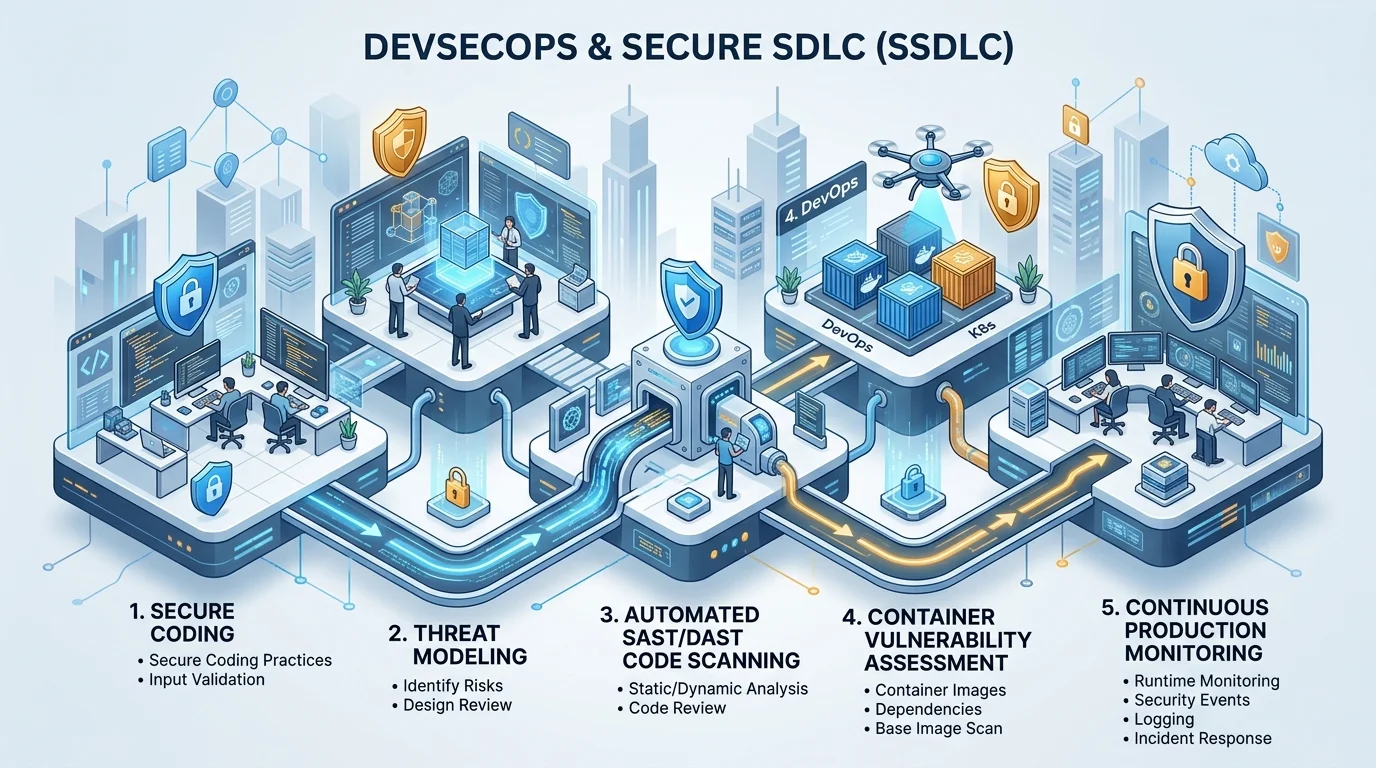
If your business runs on software, whether you build it, buy it, or depend on it every day, your security posture is part of your product. Customers, partners, and regulators increasingly expect proof, not just promises.
Most serious incidents don't come from exotic attacks. They come from known gaps left open: an unpatched dependency, a reused password, an over-permissioned account, or a backup nobody tested.
Before shipping new features for 2027, make sure these five fundamentals are locked down, starting with a clear inventory of your apps, servers, and cloud assets.
1. Multi-Factor Authentication (MFA) & Access Control
Compromised credentials remain one of the most common ways attackers get in. Close that door first.
2. Patching & Updates on a Schedule
Known vulnerabilities are only dangerous while they stay unpatched. Make updates routine rather than reactive.
3. Secure Coding Practices
Security is cheaper to build in than to bolt on. Shift it left into how your teams write and review code.
4. Tested Backups
A backup you have never restored is a hope, not a recovery plan.
5. AI Tool Rules
AI tools are now part of everyday engineering work. Define how they can and can't be used before sensitive data leaks out.
Where to Start This Week
If you only have a few days, prioritize three moves: enforce MFA, patch your most exposed systems, and test a backup restore. Build the rest into repeatable engineering habits.
Security Is a Habit, Not a One-Time Project
Security isn't a one-time project. It's small habits that make a big difference heading into 2027. The teams that stay resilient are the ones that treat these checks as routine rather than scrambling to react after an incident.
Review Your Security Posture With REEA Digital
Not sure where your current setup stands? At REEA Digital, we help businesses review and strengthen their software architecture, security posture, and digital infrastructure. Send us a message or reach out to our team to schedule a review.
Which of these five areas do you see teams struggle with most? Wherever you are starting from, a short, focused review can turn open gaps into repeatable engineering habits.